
WANDERLINGS · SIMPLE FESTIVE DAYS
Christmas Activities for Kids at Home: A Parent’s Holiday Survival Guide
Published 21 October 2026 · Easy, screen-free family ideas
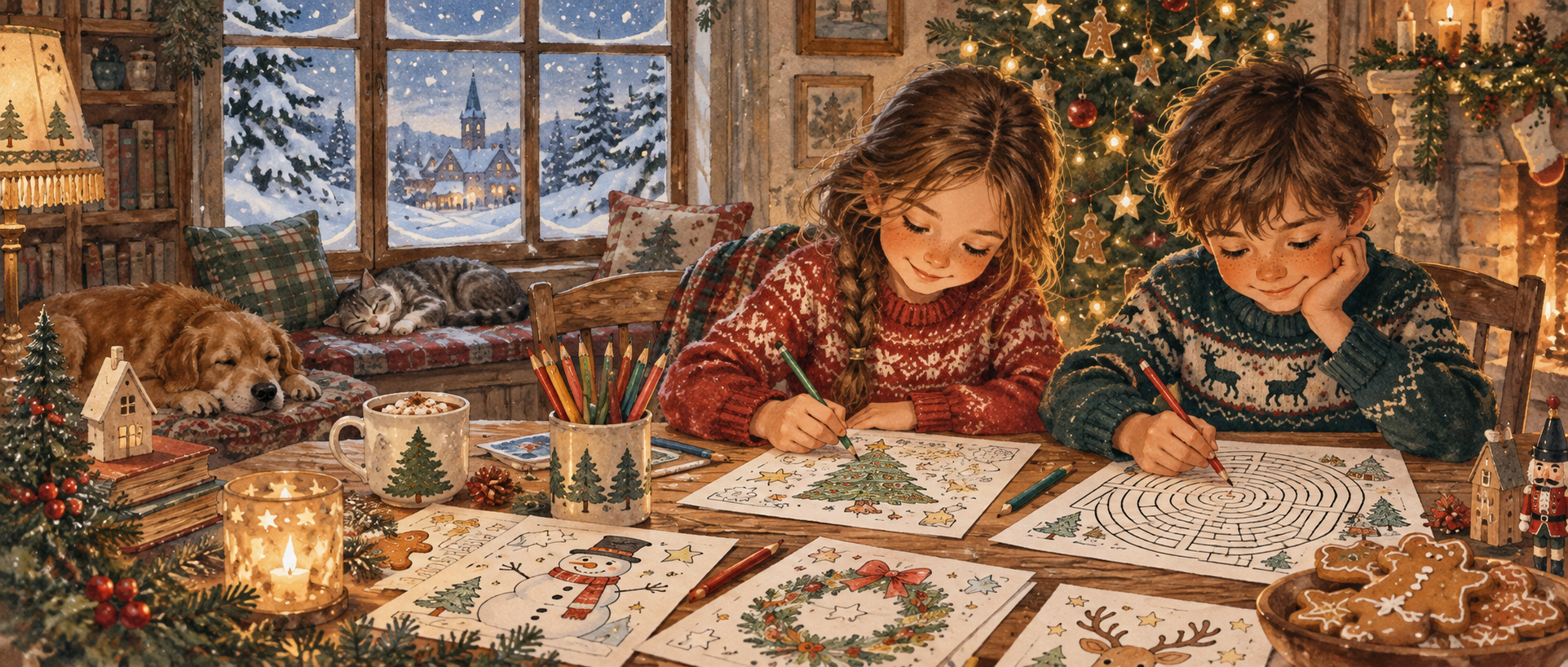
The Christmas holidays can be lovely. They can also involve wet afternoons, a mountain of washing and someone announcing they are bored before you have finished breakfast.
If you are looking for Christmas activities for kids at home, start with what you already have. Paper, a cardboard box, a few cushions and a little imagination can give an ordinary afternoon a direction. You do not need a different outing every day or a kitchen covered in glitter.
This guide brings together 15 simple ideas, a flexible daily rhythm and a few ways to make the long stretch between Christmas and school feel more manageable. Pick what suits your children, adapt the difficulty and leave the rest.
A simple way to plan the Christmas holidays
Try giving each day three small anchors: something active, something creative and something quiet. A short walk, a cardboard project and a story are enough. Fit meals, work and visits around those anchors instead of trying to entertain everyone from morning to bedtime.
- Morning: breakfast, a little movement and one activity your child chooses.
- After lunch: a quiet option such as reading, drawing or a puzzle.
- Later: free play, a simple family job and time together if the day allows.
This is a menu, not a timetable. If a den keeps them happy all morning, let it. If a plan falls apart, choose one easy idea and begin again.
15 easy Christmas activities for kids at home
Most of these ideas use everyday materials. Younger children may need help starting; older children can add rules, writing, design or a performance. Choose materials and supervision to suit your child.
1. Make a Christmas boredom jar
You need: Scrap paper, a pencil and a jar or bowl.
Write one activity on each slip: build a blanket den, draw a silly reindeer, invent a board game, make a card or put on a puppet show. Let everyone add ideas. When the familiar ‘I’m bored’ arrives, choose two slips and let your child pick one. Keep the ideas possible with things you already own.
2. Send them on an indoor festive hunt
You need: Paper and a pencil.
Ask children to find something red, something soft, something star-shaped, something that jingles and something that reminds them of winter. They can draw their finds instead of collecting them. For older children, add riddles such as ‘I have hands but cannot clap’ for a clock. Choose safe places and keep fragile decorations out of the hunt.
3. Open a wrapping-paper design studio
You need: Used paper bags, spare paper and crayons.
Turn the plain side of paper bags into homemade wrapping paper. Children can create repeating stars, tiny houses or their own invented Christmas characters. Fold small offcuts into gift tags. Give them one useful job: design the paper for a particular person and explain why the pattern suits them.
4. Build a cardboard winter village
You need: Empty boxes, paper, tape and pencils.
Use cereal boxes and clean cartons for houses, a library, a bakery and a toy workshop. Draw doors and windows, then arrange the buildings on a paper road. Older children can add street names and a map. Keep it on a tray so the village can return tomorrow. An adult should handle any difficult cutting.
5. Run a family café
You need: Paper menus and your usual snack ingredients.
Children can name the café, write or draw a menu, arrange a table and take orders. Add pretend prices for a little number practice. Serve the snack you were already planning, so the activity does not become another shopping trip. Adults handle hot drinks, heating and sharp utensils.
6. Create a living-room obstacle course
You need: Cushions, a clear floor and a little space.
Mark a route around cushions, along an imaginary tightrope and through a clear space for a reindeer walk. Add a balance challenge or a slow-motion section. Keep the course at floor level with room away from furniture and the tree. Children can redesign the route after everyone has tried it.
7. Turn a box into a Christmas invention
You need: A spare cardboard box and drawing materials.
Challenge your child to invent something Santa might need: a quiet sleigh engine, a lost-present finder or a biscuit-sorting machine. They can draw a plan, build a model and demonstrate how it works. Ask what happens when their invention goes wrong. The explanation is often the best part.
8. Make a family newspaper
You need: A few sheets of paper and pencils.
Fold the pages into a newspaper with a festive headline, a weather report, a comic strip and an interview. Suggested questions: ‘What was your funniest moment this year?’ and ‘Which family meal deserves a prize?’ Younger children can draw while an adult writes their words. Save it with the decorations for next year.
9. Have a five-object storytelling challenge
You need: Five ordinary, child-safe objects.
Choose objects such as a spoon, a sock, a toy animal, a ribbon and a wooden block. Invent a Christmas story that includes all five. Take turns adding one sentence, or let children perform it as a short show. Try a second version in which the supposed villain saves the day.
10. Make cards for someone who would enjoy one
You need: Paper and pencils.
Give each card a real recipient: a grandparent, a neighbour or a friend. Add a favourite shared memory or a picture of something they love. A specific message gives the activity more meaning than producing a pile of identical cards. Children can deliver them with you or keep them ready for the next visit.
11. Create a Christmas sound quiz
You need: Ordinary household objects.
One person makes a sound out of sight while everyone guesses: crumpling paper, stirring a spoon in a cup, tapping a box or shaking a container of dry pasta. Use sealed containers and avoid small loose pieces around younger children. Let children become quizmaster and invent clues when a sound is tricky.
12. Open a toy repair and sorting workshop
You need: Existing toys and a few containers.
Invite children to reunite puzzle pieces, match game cards and build a home for favourite figures. They can make labels and a ‘ready for adventure’ shelf. Choose one small collection rather than the whole room. Set aside broken items for an adult to assess; children do not need to fix them.
13. Design a festive board game
You need: Paper, counters and a die if you have one.
Draw a path from home to a snowy village. Add spaces such as ‘Help a lost reindeer: move forward two’ and ‘Dropped the presents: miss a turn’. If there is no die, draw numbered slips from a bowl. Play once, then invite your child to change any rules that made the game less fun.
14. Make a cosy reading picnic
You need: A blanket, books and an ordinary snack.
Spread a blanket on the floor and let everyone bring a book. Read aloud, look at pictures or give a favourite character a new ending. Children who prefer drawing can design the cover for an imaginary Christmas book. The picnic can be ten quiet minutes; it does not need to fill an afternoon.
15. Create a tiny holiday memory book
You need: Folded paper and pencils.
Use one small page each day for something funny, something delicious, something you noticed or someone you enjoyed seeing. Children can draw, write a sentence or dictate a caption. Leave space for ordinary moments as well as Christmas Day. A funny breakfast conversation belongs in the book too.
What to do with kids on rainy Christmas holiday days
When everyone is stuck indoors, change the kind of activity before finding another one. Follow sitting with movement, noisy play with a quiet corner, or a shared game with time to play separately.
A simple rainy-day combination is a cushion course before lunch, a family café for snack time and a reading picnic later. Keep a small basket of paper, pencils, tape and a familiar puzzle within reach. Put out one or two choices instead of emptying every cupboard.
How to keep kids busy while you get something done
Choose a familiar task your child can manage safely, help them begin and explain when you will check back. ‘Design three houses for our village while I finish this email’ gives a clearer starting point than ‘Go and play’.
Keep expectations realistic. Some children will happily build independently; others need company or help returning to a task. Start with a short stretch and be available. Independent play is an option to practise gently, rather than a promise of uninterrupted time.
Give the days after Christmas a little shape
The days between Christmas and New Year can blur together. Give each one a loose theme: a making day, a games day, a fresh-air day or a cosy day. Let children help choose and use toys, games and books you already own.
Leave space for ordinary jobs, too. Setting the table, choosing a meal or sorting photographs can become something you do together. Not every worthwhile holiday moment needs to look like an activity.
Questions parents ask about Christmas activities at home
What are easy Christmas activities that do not cost much?
Try an indoor hunt, homemade cards, a cardboard village, a storytelling game or a reading picnic. Start with spare paper and existing toys, and skip ideas that require buying supplies.
How can I keep different ages busy together?
Use one project with different roles. For a winter village, a younger child might colour houses while an older child designs a road map. In a family café, one can draw the menu while another writes prices and takes orders.
What can kids do on Christmas Day while waiting for dinner?
Set out a small drawing challenge, ask them to make place cards or start a gentle sound quiz. Choose something easy to pause when food is ready and keep play away from the busy cooking area.
Do I need to plan activities for every day?
No. Keep a handful of ideas ready and use them when they help. Free play, familiar routines and quiet time all have a place. The aim is a manageable holiday with some enjoyable moments, not a full programme of entertainment.
Make room for your kind of Christmas
Choose two or three ideas from this list and let your children pick the first. Keep the materials simple, stop when an activity has run its course and repeat the favourites. A cardboard village that grows over several days can be just as memorable as a big day out.
For another afternoon of discovery, read our Christmas traditions in Europe for kids guide. Or explore more seasonal family ideas for the holidays ahead.